

Lee Haney once enunciated, “Exercise to stimulate, not to annihilate. The world wasn’t formed in a day, and neither were we. Set small goals and build upon them.” This phrase succinctly put forth the whole gist of the article. A new study says that too much exercise can be bad for your mental health. What you need is the right balance between exercise and endorphins. Endorphin is what gets us hooked. It gives us a happy high which researchers have likened to one produced by other opioids. A reason why many people get hooked to their exercise routine- the most popular way to get your daily fix of endorphins. Being active for 30 to 60 minutes every second day is the optimum amount, according to the study led by Dr Adam Chekroud, assistant professor of psychiatry at Yale University. “Exercising more than 23 times a month, or exercising for longer than 90-minute sessions, is associated with worse mental health, “said Chekroud. The reasons could be anything from taxing your body or feeling burned out. It’s time to slow down. Therefore, I will list some harmful effects of over exercising to make you realize that excess of everything is bad.
Decreased performance: If you notice a dip in your performance while working out especially when doing aerobic exercises like cycling, swimming and running, it means that your body is being pushed too hard. Exercising stops working for you the moment it becomes a matter of stress. The feel-good factor should remain in your workout. 
Drop in energy: If you have been missing the familiar high after working out or if you constantly feel physically and mentally tired, it may mean that your body is exhausted and needs a rest. Overdoing workouts can lead to diminished strength, disinterest in exercises, fatigue, overeating. It’s your body’s way of trying to tell you please stop.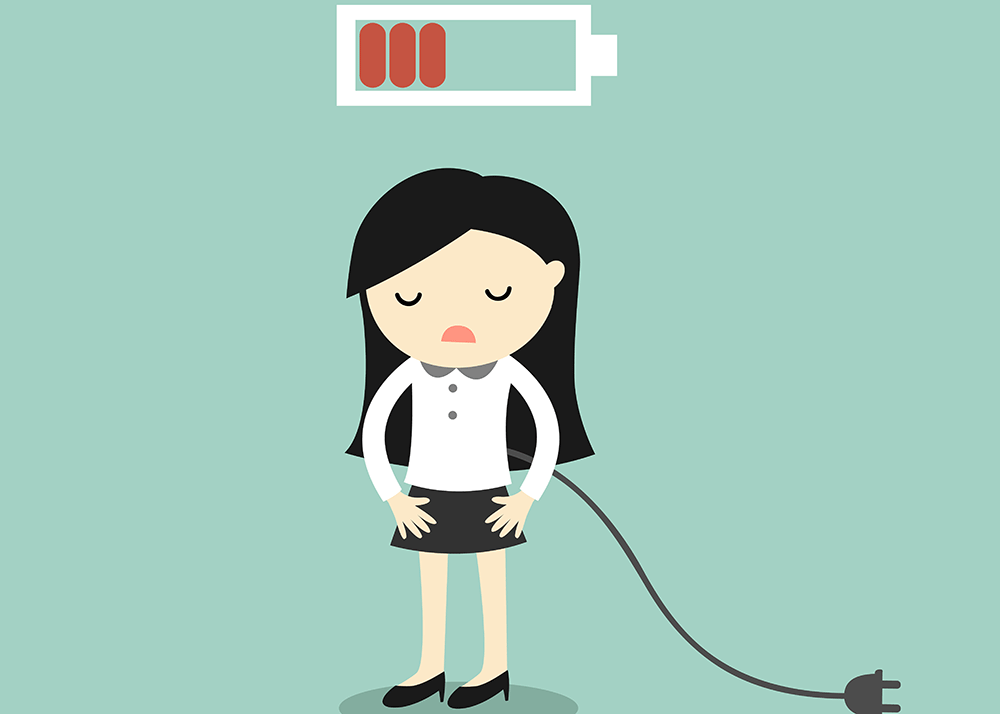
Sleeplessness: While moderate exercise can relax you and can give a night of blissful sleep, too much can have you tossing and turning all night due to restlessness and disrupted sleep. Overtraining has a knack for spiralling into a dark place.
Aches and pains: When you don’t give your muscles time to recover, it results in persistent soreness that can seriously hamper your everyday activities, besides making you feel lousy. For this reason, it is one of the harmful effects of over exercising.
Dark or reddish urine
If you notice colour changes in your urine after a workout it could signal a condition called rhabdomyolysis, where substances from damaged muscle tissue leak into the blood. This could also cause kidney problems. Medically, it is advised to advance slowly in your workout.
People need to remember that technology might have cars, trains, phones, very different in the last 40 years but the human body has been in existence for centuries. Sticking with simple effective movements is better than trying fancy exercises. Thus, always keep in mind these harmful effects of over exercising.


